God Isn't Finished With You Yet
Embracing Your God-Given Destiny

Chris Smithey
January 30, 2026
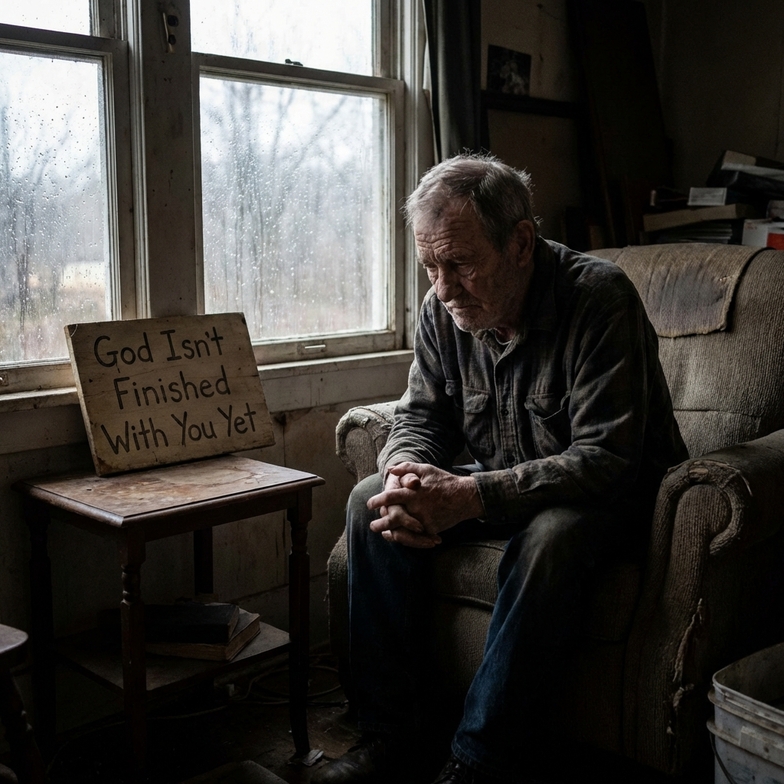
Have you ever felt like your best days are behind you? Perhaps you've looked in the mirror and wondered whether God is finished with you now that your hair has gone gray or your steps have slowed. Maybe illness or disability has made you question whether you still have something meaningful to offer this world. Let's make sure you understand with absolute certainty: God is not done with you yet.
The world may worship youth and measure worth by productivity, but God's economy works differently. He doesn't retire His servants at 65. He doesn't discard those who move more slowly or need assistance. In fact, some of the most powerful moments in Scripture, and throughout history, happened when people were well past what society considers their "prime."
Think about Moses. When God appeared to him in that burning bush, Moses wasn't a young, ambitious leader. He was 80 years old—an age when most people in his time were long gone. He'd spent 40 years in the wilderness tending sheep, probably thinking his chance to make a difference had passed. Yet God said, "Now I'm ready to use you." Moses went on to lead an entire nation out of slavery and receive the Ten Commandments. His greatest work began at an age when many today are settling into retirement.
Or consider Abraham and Sarah. God promised them a child when Abraham was 75 and Sarah was 65. They waited another 25 years before Isaac was born. Can you imagine? Sarah laughed at the impossibility of it all, and who could blame her? Yet, in their old age, God established a covenant that would bless all nations. Their most important contribution to history came when they were, by any measure, senior citizens.
Then there's Anna, the prophetess in the Gospel of Luke. She was 84 years old, widowed for decades, spending her days in the temple in prayer and fasting. She could have been retired in a rocking chair, thinking she was just another elderly widow. Instead, she became one of the first people to recognize the infant Jesus as the Messiah. Her years of faithful waiting positioned her for one of the most significant moments in human history.
This pattern didn't end with Scripture. History is filled with people who found their greatest purpose in their later years. Colonel Harland Sanders was 65 years old and broke when he started franchising Kentucky Fried Chicken. He'd failed at multiple businesses and was living on a small Social Security check. Most people would have given up. Instead, he drove around the country in his old car, sleeping in the back seat, trying to sell his chicken recipe. Today, KFC serves millions of people worldwide. His "retirement years" became his most impactful.
Laura Ingalls Wilder didn't publish her first "Little House" book until she was 64. She'd lived a hard life as a pioneer, facing poverty, loss, and struggle. But those experiences became the foundation for stories that have inspired generations of children and adults alike. Her writing career, the work she's most remembered for, began when many people were winding down.
Grandma Moses started her painting career at 78 after arthritis made embroidery too difficult. She went on to create over 1,600 paintings and became one of America's most beloved folk artists. Museums around the world display her work. She painted until she was 101, proving that creativity and contribution have no expiration date.
Frank McCourt was 66 when he published "Angela's Ashes," his memoir of growing up in poverty in Ireland. It won the Pulitzer Prize and touched the hearts of millions. All those years of living, struggling, and teaching gave him a story worth telling—but only when the time was right.
So, what can we draw from these stories? Two things. First, if you are still here, God has a purpose for you. If He was through with you, he would have taken you home. The second is important to understand: God doesn't waste anything. Every experience you've had, every hardship you've endured, every lesson you've learned—it's all been preparation. The wisdom you've gained through decades of living is irreplaceable. The patience you've developed through suffering is a gift. The perspective you have on what truly matters is desperately needed in our hurried, distracted world.
Maybe you can't do what you once did. Perhaps your body has limitations now that it didn't have before. But consider this, your purpose might not require physical strength. It might require the kind of spiritual strength that only comes through years of walking with God.
Here are a few things you can do. You can pray. Don't underestimate the power of a praying saint who has learned to intercede with faith forged through decades of answered prayers. You can encourage those whom God brings into your life. Your words carry weight because they come from someone who has weathered life's storms. God may bring people into your life that you can mentor. Many people desperately need the wisdom that only comes from having lived through both triumphs and failures. You can be an example of love and peace. Being someone who has learned to love through loss and disappointment is a profound gift, as you model grace in a way only someone who has needed much forgiveness can. You can worship—with a depth of gratitude that comes from seeing God's faithfulness over many years.
Maybe someone reading this, disability has become part of your story. Please hear this: your worth is not determined by what you can do. God's love for you isn't based on your productivity. You are His beloved child, created in His image, precious beyond measure, regardless of your physical or mental capabilities.
Joni Eareckson Tada became a quadriplegic at seventeen after a diving accident. She could have concluded that her life was over. Instead, she has spent decades as a powerful advocate for people with disabilities, an author, artist, and speaker who has touched millions of lives. Her disability became the platform for her purpose, not the end of it.
Your limitations might actually be the very thing that allows others to see God's strength more clearly. Paul wrote about his "thorn in the flesh," and God's response was, "My grace is sufficient for you, for my power is made perfect in weakness." Sometimes our weakness becomes the canvas on which God paints His most beautiful work.
Final Thoughts
So if you're reading this and wondering whether your life still matters, let me answer clearly. Yes. Absolutely yes. God has not forgotten you. He has not moved on to younger, more capable people. He is not finished writing your story. The question isn't whether God has a purpose for you. He does. The question is whether you'll trust Him enough to keep showing up, keep being faithful in the small things, keep offering whatever you have to give, even if it seems insignificant. Little is much when God is in it.
Remember, God used a boy's small lunch to feed five thousand people. He used a widow's two small coins to teach a lesson about generosity that has echoed through the centuries. He specializes in taking what seems small or insufficient and doing something extraordinary with it. Your prayers matter. Your presence matters. Your story matters. Your faithfulness matters. But most importantly, you matter. Not because of what you can do, but because of whose you are.
God is still writing your story. Don't close the book before He's finished.
Resources
Blog